Trader-led wheeling to play big role S Africa’s renewable power market in 2026

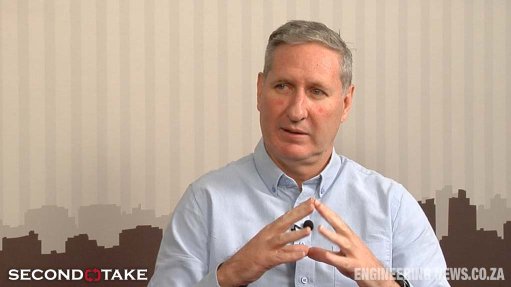
Discovery Green CEO Andre Nepgen outlines the role that trader-led wheeling will play in South Africa’s renewable power market in 2026.



South Africa’s renewable-energy market is entering a decisive new phase in 2026, shaped by electricity reform, tightening grid capacity and changing project economics — with trader-led wheeling models rapidly emerging as the principal commercial structure for large power users. This is the view of Discovery Green CEO Andre Nepgen, who highlights that procurement strategy is now as important as price in securing long-term energy resilience.
“Electricity reform is moving from policy design into practical implementation, bringing clearer governance structures and participation rules,” he notes.
While the proposed South African Wholesale Electricity Market remains under development, Nepgen says the most immediate and practical impact is being felt in the maturing wheeling framework, where standardised processes and clarified participation rules are enabling faster deal flow and broader market access.
Wheeling allows electricity generated by independent producers to be transmitted across the grid to private customers. Historically, these arrangements were structured as one-to-one bilateral agreements between a generator and a large customer, often through complex and lengthy power purchase agreements. That model is now giving way to trader-led, portfolio-based structures.
According to Nepgen, the shift has been rapid. In the past year, about 80% of newly closed private renewable-energy generation has been channelled through traders rather than direct bilateral contracts. He attributes this to the risk and simplicity benefits that traders can offer customers.
Under a trader-led model, licensed electricity traders aggregate supply from multiple independent power producers and match it with diversified customer demand portfolios. Rather than simply passing power through, traders increasingly assume contractual and operational risks — including volume mismatches, under- or over-consumption and certain force majeure exposures — and convert highly technical, multi-hundred-page agreements into simpler energy supply contracts.
Nepgen says aggregation enables scale and improved project economics, while also allowing shorter and more flexible contract terms for buyers. “Aggregation is what turns renewable energy from a risk into a predictable system that works for business,” he notes, adding that trader participation is helping renewable energy function as a scalable market rather than a series of bespoke transactions.
At the same time, assumptions that renewable-energy costs — particularly solar — would continue to fall are being challenged. Global input-cost pressures are now pushing prices upward. A key factor is the expected removal of China’s 9% VAT export rebate on solar modules and wafers from April 2026, with many supply contracts already including policy-adjustment clauses that will automatically lift prices once the rebate falls away.
In addition, rising demand for solar installations has strained raw-material supply chains. Silver — a critical component in solar cells — has nearly doubled in price over two years, while newer high-efficiency N-type panels require even greater silver loading. Hardware, logistics and battery system costs remain largely dollar-denominated, limiting the benefit of rand strength. Nepgen says engineering, procurement and construction contractors and equipment suppliers are already signalling price increases.
On the tariff side, regulated electricity prices continue to rise, reinforcing the value of price-certain renewable supply. Against this backdrop, Nepgen cautions that waiting for further cost declines is no longer a reliable strategy and that early movers are better positioned to secure favourable long-term pricing.
Grid access, meanwhile, has become the single largest constraint on renewable-energy expansion. Resource-rich provinces — notably the Northern, Western and Eastern Cape — are effectively saturated, with firm grid capacity fully allocated and a project connection backlog measured in the tens of gigawatts. Developers are increasingly indicating grid-connection timelines stretching into 2030 and beyond, compared with the roughly two-year expectations that existed previously.
Transmission expansion plans are in place, including major new high-voltage line builds, but execution speed remains a bottleneck. Interim measures such as congestion curtailment — allowing limited output reductions to connect more projects — may unlock some additional capacity, but are not a complete solution.
Regulatory and process hurdles also remain. Nepgen notes that trader rules and grid-access rules are being rolled out as part of broader reform, but that distributor approvals and connection processes can still slow project timelines. However, he views these as solvable constraints and part of a broader reform trajectory that is directionally positive.
With reform, rising costs and grid constraints meeting, innovation in wheeling structures, portfolio design and risk management is expected to speed up. Nepgen argues that the window for passive observation has closed. In a market increasingly defined by both opportunity and constraint, he says, decisive early action — particularly through trader-led wheeling models — will be central to achieving cost certainty and operational resilience in the years ahead.
Article Enquiry
Email Article
Save Article
Feedback
To advertise email advertising@creamermedia.co.za or click here

Projects

Latest Multimedia

Latest News


Showroom

CMTS is a leading, well-established EC&I contractor with 37+ years of mining and industrial experience. We execute full-scope EC&I projects with...
VISIT SHOWROOM


Announcements
What's On
Subscribe to improve your user experience...
Option 1 (equivalent of R125 a month):
Receive a weekly copy of Creamer Media's Engineering News & Mining Weekly magazine
(print copy for those in South Africa and e-magazine for those outside of South Africa)
Receive daily email newsletters
Access to full search results
Access archive of magazine back copies
Access to Projects in Progress
Access to ONE Research Report of your choice in PDF format
Option 2 (equivalent of R375 a month):
All benefits from Option 1
PLUS
Access to Creamer Media's Research Channel Africa for ALL Research Reports, in PDF format, on various industrial and mining sectors
including Electricity; Water; Energy Transition; Hydrogen; Roads, Rail and Ports; Coal; Gold; Platinum; Battery Metals; etc.
Already a subscriber?
Forgotten your password?
Receive weekly copy of Creamer Media's Engineering News & Mining Weekly magazine (print copy for those in South Africa and e-magazine for those outside of South Africa)
➕
Recieve daily email newsletters
➕
Access to full search results
➕
Access archive of magazine back copies
➕
Access to Projects in Progress
➕
Access to ONE Research Report of your choice in PDF format
RESEARCH CHANNEL AFRICA
R4500 (equivalent of R375 a month)
SUBSCRIBEAll benefits from Option 1
➕
Access to Creamer Media's Research Channel Africa for ALL Research Reports on various industrial and mining sectors, in PDF format, including on:
Electricity
➕
Water
➕
Energy Transition
➕
Hydrogen
➕
Roads, Rail and Ports
➕
Coal
➕
Gold
➕
Platinum
➕
Battery Metals
➕
etc.
Receive all benefits from Option 1 or Option 2 delivered to numerous people at your company
➕
Multiple User names and Passwords for simultaneous log-ins
➕
Intranet integration access to all in your organisation